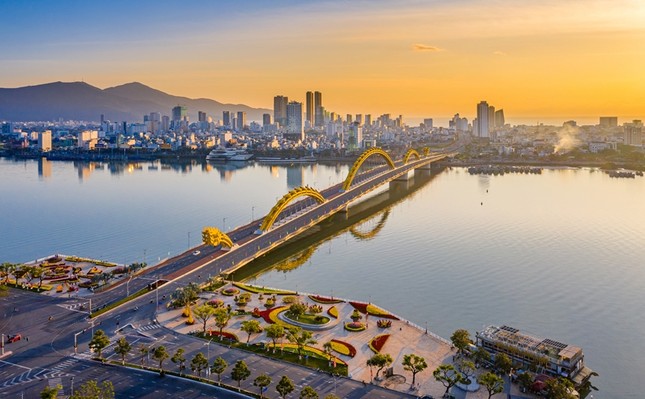
On 27 June 2025, only two weeks after the official establishment of the Da Nang Free Trade Zone, Vietnam continued its institutional reform momentum by approving the policy to develop the Hai Phong Free Trade Zone (Hai Phong FTZ). This move not only marks the next step in expanding the country’s special institutional corridor along the North–Central axis, but also serves as a clear invitation to international investors seeking an advanced legal environment, world-class infrastructure, and opportunities to integrate into Asia’s dynamic supply chains.

Hai Phong Port
While the Da Nang FTZ is positioned as the gateway to the East Sea for the Central Vietnam economic triangle, Hai Phong – as the logistics hub of the North – plays a pivotal role in the Northern Key Economic Region. With deep-water seaports, inter-regional expressways, an international airport, and direct connectivity to China, Japan, and South Korea, the Hai Phong FTZ is ideally located to become a regional center for manufacturing, trade, and services, seamlessly linked with the Northeast Asia – ASEAN supply chain.
Operating under a unique institutional framework enacted by the National Assembly, the Hai Phong FTZ will adopt a “single-window, on-site” model, featuring broad administrative decentralization and streamlined procedures. It is also designated as a testbed for breakthrough policy innovations in finance, digital technology, e-commerce, cross-border data flows, and innovation – enabling advanced business models to be deployed rapidly with minimal regulatory friction.
In addition to its strategic location and modern infrastructure, the zone is expected to offer exceptional investment incentives: exemptions and reductions in corporate income tax, import duties, and land rents, along with investment protection mechanisms aligned with international standards. A transparent and stable legal framework will serve as the foundation for long-term investment decisions.
The consecutive establishment of free trade zones in Da Nang and Hai Phong not only expands Vietnam’s economic space but also signals a major strategic shift: from traditional incentives to institutional competitiveness and execution capacity – a direction that sets Vietnam apart from many other emerging economies. Now is a golden opportunity for global investors to be part of shaping a new-generation free trade zone model – one that combines flexible institutions, modern infrastructure, and deep regional connectivity.